

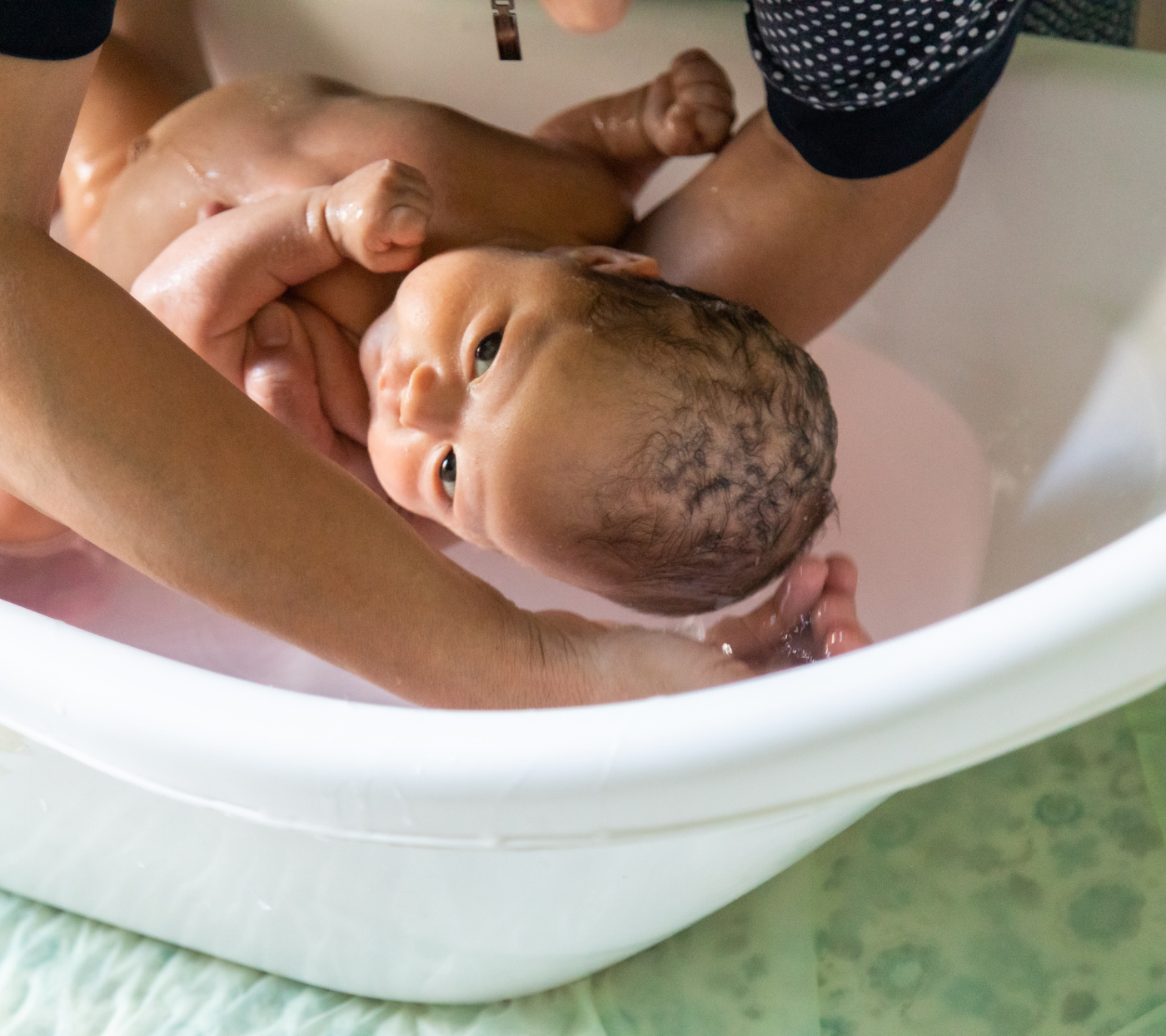
Bathing your newborn can feel intimidating…tiny bodies, slippery skin, and a million questions about safety and comfort. But with the right routine, bath time can become one of the most cherished bonding moments you share with your baby. This guide covers everything you need to know, from the very first sponge bath to building a confident, joyful routine (including innovative water-based bonding with the Otteroo).
Newborn Bath Basics at a Glance
-
First tub bath: After the umbilical cord stump falls off (usually 1-2 weeks).
-
Frequency: 2-3 times per week (daily full baths not needed).
-
Water temperature: 98-100°F (37–38°C).
-
Duration: 5-10 minutes at first, up to 15-20 minutes as baby adjusts.
-
Top priorities: Safety, comfort, and bonding.
When to Start Bathing Your Newborn
The American Academy of Pediatrics recommends waiting until your baby's umbilical cord stump falls off and heals before giving a tub bath. This usually happens within the first 1-2 weeks.
What to do before that? Stick to gentle sponge baths. Keep the umbilical area clean and dry, and avoid submerging your baby in water.
Ready for a tub bath when:
-
The cord stump has completely fallen off and healed.
-
There are no signs of infection (redness, swelling, pus, or foul odor).
-
Your baby seems alert and healthy.
Sponge Baths vs. Tub Baths: What's the Difference?

Sponge Bath (before cord heals):
-
Lay your baby on a soft, safe surface (towel or changing pad).
-
Use a warm, damp washcloth to gently clean the face, neck, hands, and diaper area.
-
Only expose one part at a time to keep your baby warm.
-
Avoid getting the umbilical stump wet.
Tub Bath (after cord heals):
-
Use a small baby tub or clean sink with 2-3 inches of warm water.
-
Always support your baby's head and neck.
-
Wash from head to toe, starting with the cleanest areas (face) and ending with the diaper area.
Daily Hygiene: "Topping and Tailing"
You don't need to bathe your newborn every day. Instead, practice "topping and tailing" (as recommended by the NHS) to keep your baby clean between baths.
"Topping" (face and upper body):
-
Clean eyes with cotton and cooled boiled water (use a separate piece for each eye).
-
Gently wipe face, neck creases, and behind ears.
-
Clean hands and under fingernails.
-
Check and clean nose if needed.
"Tailing" (bottom area):
-
Thorough diaper area cleaning with each change.
-
Clean between leg creases and folds.
-
Pat dry completely to prevent diaper rash.
This daily routine maintains hygiene without over-washing delicate newborn skin.
Essential Supplies & Safety Checklist Must-Haves:
-
Small newborn bathtub or clean sink
-
Bath thermometer (essential for safety)
-
Soft washcloths (2-3 for different areas)
-
Mild, fragrance-free baby soap
-
Soft hooded towels (2-3 for warmth)
-
Non-slip mat for tub and floor
Safety checklist before every bath:
-
✅ Room temperature 75-80°F
-
✅ Water temperature 98-100°F (always use thermometer)
-
✅ All supplies within arm's reach
-
✅ Phone silenced and put away
-
✅ Clean clothes and diaper laid out
-
✅ Baby is alert but not hungry or overtired
Step-by-Step Bathing Routine Preparation (5 minutes):
-
Gather all supplies within arm's reach.
-
Fill tub with 2-3 inches of water at 98-100°F.
-
Test temperature with thermometer AND your elbow.
-
Ensure room is warm and draft-free.
The bath (5-10 minutes):
-
Gentle entry: Lower baby feet-first, supporting head and neck securely.
-
Start with face: Use soap-free water for eyes, mild soap for rest of face.
-
Work downward: Clean neck creases (where milk often pools), arms, chest.
-
Body washing: Gently clean tummy, back, and limbs.
-
Diaper area last: Wash thoroughly but gently with fresh washcloth.
-
Hair care: Use small amount of baby shampoo if needed.
-
Gentle rinse: Pour water carefully, always shielding baby's face.
Post-bath care:
-
Immediate wrapping: Lift baby into warm towel right away.
-
Pat dry: Gently pat (don't rub) skin dry, especially in creases.
-
Quick dressing: Move efficiently to prevent chilling.
-
Comfort time: Many babies are hungry or sleepy after baths.

Common Bathtime Challenges & Solutions
1: Baby cries during every bath. Why it happens: Temperature shock, feeling insecure, overstimulation Solutions: Ensure water and room are adequately warm, try shorter sessions, use soft lighting and gentle voice, consider more secure positioning methods
2: Fear of holding a slippery baby. Why it's common: Wet babies are naturally slippery, and new parents understandably feel nervous Solutions: Use textured bath mats, keep dry washcloths nearby for grip, have partner assist initially, consider hands-free alternatives
3: Water temperature difficulties. Why it matters: Baby skin is much more sensitive than adult skin Solutions: Always use a bath thermometer, test with elbow as backup, pre-warm the room, add warm water gradually if bath cools
The Otteroo Approach: Water-Based Bonding that Transforms Bath Time Stress into Bonding Bliss
For many parents, traditional newborn bathing feels awkward and stressful. The Otteroo neck float, safe for babies as young as 2 weeks old (after umbilical cord healing), offers a revolutionary approach that recreates the soothing womb environment your baby knew for nine months.
How Otteroo changes the bath time experience:
-
Womb-like movement: Gentle swaying and floating motions naturally soothe babies.
-
Gentle massage effect: Water provides continuous, soothing pressure on baby's developing skin.
-
Muscle relaxation: Warm water helps release tension and promotes overall comfort.
-
Sensory development: Rich sensory input supports your baby's developing nervous system.
-
Natural movement: Freedom to move arms and legs supports healthy motor development.
Learning and Bonding Through Water: Parents often report that Otteroo sessions allow them to:
-
Observe their baby's natural movement patterns and preferences.
-
See early signs of personality and temperament.
-
Watch their baby gradually adapt to life outside the womb.
Universal Bath Safety Guidelines
-
Never leave your baby alone in water, even for seconds.
-
Temperature testing: Always use a thermometer – adult hands can't accurately judge safe temperatures.
-
Firm support: Keep one hand supporting baby's head and neck at all times in traditional baths.
-
Room temperature: Keep bathroom warm (75-80°F) to prevent chilling.
Otteroo-Specific Safety Guidelines:
-
Age requirement: Minimum 2 weeks old, after umbilical cord completely heals.
-
Proper fit: Neck float should be snug but not tight – follow sizing guidelines carefully.
-
Constant supervision: Never leave baby unattended, even with secure float.
-
Session limits: Start with 5-10 minutes, gradually increase as baby shows comfort.
-
Pre-use inspection: Check for proper inflation and any signs of wear before each use.
Emergency Preparedness:
-
Be able to quickly lift baby out of water safely (keep hands free, other young children out of the way, etc.).
-
Keep towels immediately accessible.
-
Have a plan for temperature adjustment if needed.
-
Recognize signs that baby needs to come out (excessive fussiness, skin color changes, shivering).
Frequently Asked Questions
Q: How often should I really bathe my newborn?
A: The Mayo Clinic recommends 2-3 times per week for newborns. Their skin is delicate, and they don't get very dirty. Daily "topping and tailing" keeps them clean between baths.
Q: What's the safest way to test water temperature?
A: Always use a bath thermometer for accuracy (98-100°F). Your elbow can serve as a backup test, but never rely solely on your hands – they're less sensitive to heat than your baby's skin.
Q: When can I start using Otteroo?
A: As early as 2 weeks old, once the umbilical cord has completely healed and your pediatrician has cleared your baby for tub baths.
Q: My baby cries during every bath. Is this normal?
A: Yes, very common initially. Most babies adjust within 2-4 weeks of gentle, consistent routine. Ensure adequate warmth, try shorter sessions, and consider positioning methods that feel more secure.
Q: How do I know if my baby is enjoying bath time?
A: Look for relaxed body posture, calm facial expressions, curiosity about surroundings, and decreased crying over time. With Otteroo, you might notice gentle arm and leg movements and alert, interested expressions.
Q: What should I do if I'm nervous about bathing my newborn?
A: This is completely normal! Start with very short sessions, have your partner help, practice holding techniques when baby is dry, and consider methods that build your confidence gradually.
Summary & Key Takeaways
Creating a successful newborn bathing routine is about much more than just getting your baby clean, it's about building confidence, creating positive associations, and establishing precious bonding moments that will last a lifetime.
Remember these essential principles:
-
Safety always comes first: Proper temperature, constant supervision, and secure positioning!
-
Start gradually: Short, gentle sessions that build comfort for both you and baby.
-
Every baby is different: What works for others may not work for yours. Stay flexible!
-
Innovation can help: Methods like Otteroo can transform stressful experiences into bonding opportunities.
-
Consistency builds comfort: Regular routine helps babies know what to expect.
The bigger picture: These early weeks of learning to care for your baby, including mastering bath time, are building blocks for your confidence as a parent. Whatever bathing method you choose, the most important element is creating safe, loving experiences.
Many parents find that once they discover an approach that works, whether it's perfecting traditional techniques or embracing innovations like the Otteroo, bath time transforms from a source of anxiety into one of their most treasured daily rituals.
Trust yourself, prioritize safety, and remember that every splash, every gentle touch, and every moment of care is building the foundation for a lifetime of love and connection with your baby.