

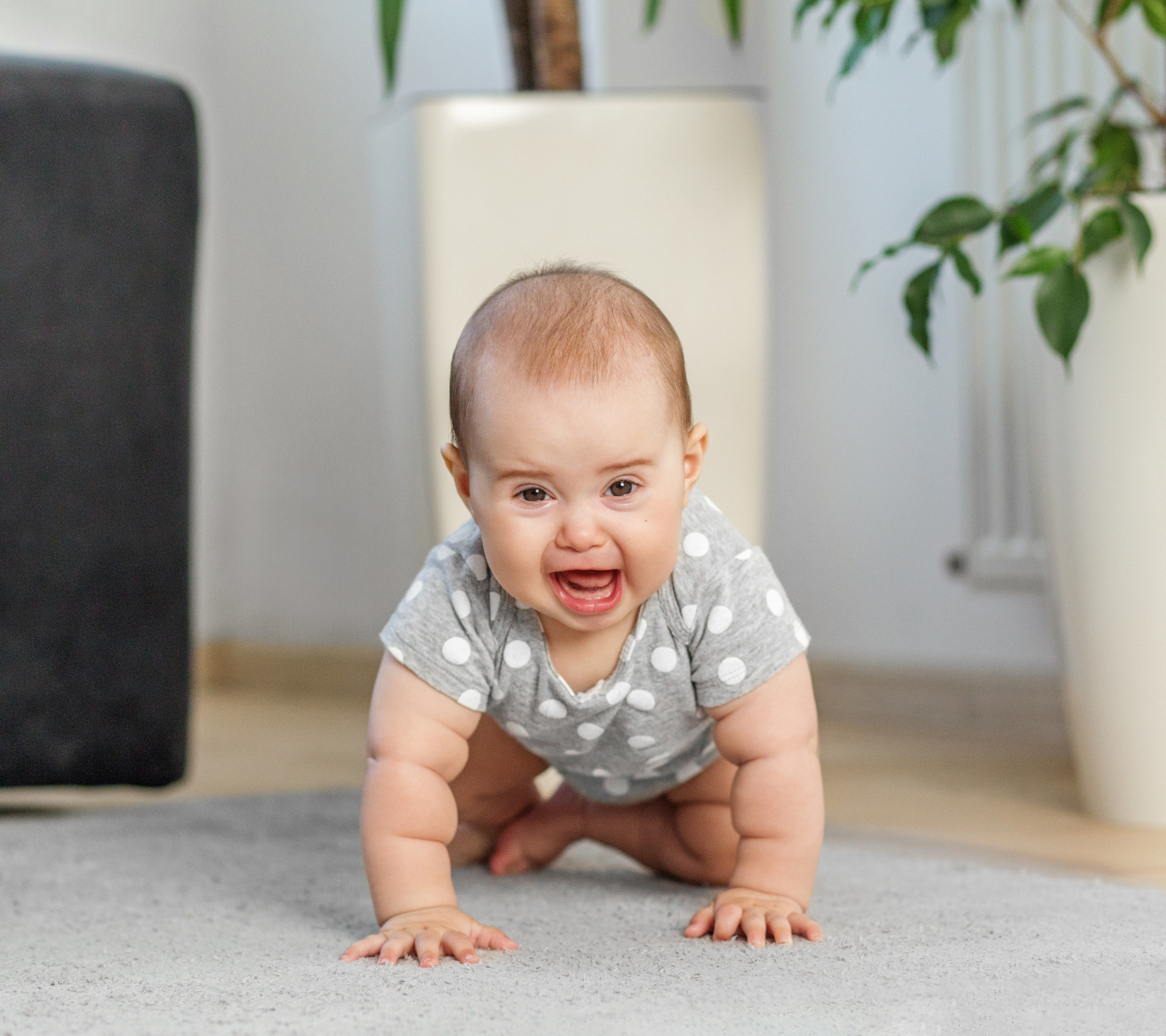
Every parent has been there – comparing your baby's progress to the baby next door, the cousin's kid, or that overachiever on Instagram who's apparently walking at 8 months. Here's what those milestone charts don't tell you: when your baby hits these milestones matters way less than what happens once they start moving.
Motor milestones aren't just physical achievements. They're brain-building, world-understanding, independence-creating experiences that shape how your baby learns everything else.
What Actually Happens When Babies Learn to Move
When your baby learns to crawl, something remarkable happens in their brain. Within weeks of crawling onset, researchers have documented dramatic changes:
They suddenly fear heights. Before crawling, babies lowered toward a visual cliff show curiosity. After crawling? They refuse to cross it. Movement teaches them about spatial relationships and what's safe versus risky.
Their memory improves dramatically. Pre-crawling babies struggle to find hidden objects. Crawling babies excel at it. Why? When you can move yourself, you need to remember where things are in relation to each other, not just in relation to you.
They become more socially aware. Crawling babies make more eye contact, respond better to pointing and gestures, and show more sophisticated emotions…When you're mobile, you need to check in with your safe person more often!
This isn't correlation. Studies using powered mobility devices (allowing pre-crawling babies to move independently) show the same brain development changes. Movement itself triggers these changes.
The Real Motor Milestone Timeline
0-3 Months: Building the Foundation
Your baby is working on head control and discovering their hands and feet. Those wobbly head lifts during tummy time? They're building core strength for everything that comes next.
Water advantage: Starting at 2 weeks (after umbilical cord heals), water provides a unique environment to practice movement without fighting gravity. The gentle resistance builds strength naturally.
3-6 Months: The Rolling Phase
Rolling, reaching, sitting with support. Some babies skip rolling entirely and go straight to sitting – totally normal.
What helps: Water movement gets interesting here. Babies practice reaching and grasping where objects move differently, requiring adjusted motor planning.
6-9 Months: Everything Changes
This is the BIG SHIFT. Sitting independently, crawling (army, belly, or hands-and-knees), pulling to stand. Once babies can move on their own, everything changes, physically, cognitively, and emotionally.
The sweet spot: Independent movement in water during this stage provides experiences babies can't get on land, like 360-degree movement, gentle resistance, and freedom from gravity.
9-12 Months: Freedom Seekers
Confident crawling, standing independently, maybe first steps (though 18 months is still completely normal). Your baby's brain is exploding with connections (and it’s really time to baby-proof things now!).
Not All Crawling Is Equal
Here's something fascinating: belly crawling doesn't provide the same developmental benefits as hands-and-knees crawling.
The reason? Belly crawling is so effortful that babies use all their mental energy just moving forward. They can't pay attention to their environment, remember locations, or make spatial decisions.
Hands-and-knees crawlers can look around, notice things, and learn. Their brains are free to develop those crucial spatial skills.
What this means: If your baby belly crawls for weeks without progressing, give them strength-building opportunities; think, varied surfaces, reaching activities, and water movement.

Why Water Movement Is Different
Water provides something land-based activities can't: the ability to move in all directions with gentle resistance and complete support.
For pre-crawling babies (2 weeks - 6 months):
-
Practices movements they can't do on land yet
-
Builds muscle strength without strain
-
Experiences cause and effect (I kick, I move!)
-
Gets organizing sensory input
For crawling babies (6-12 months):
-
Releases pent-up physical energy
-
Helps regulate their nervous system
-
Supports better sleep and mood regulation
-
Provides movement experiences impossible on land
Research using powered mobility devices shows that independent movement, regardless of how it's achieved, triggers brain development. Otteroo provides this months before crawling.
Your Biggest Worries, Addressed
"My baby skipped crawling"
About 10% of babies do this. They catch up on spatial skills once walking, though it takes a few extra months. The key is ensuring plenty of movement opportunities through floor time and varied activities.
"My baby isn't crawling at 9 months"
The normal range is 6-12 months. Some crawl at 5 months; others wait until almost their first birthday.
When to call the doctor:
-
No movement by 12 months
-
Strong preference for one side
-
Stiff or floppy muscle tone
-
Not bearing weight on legs by 12 months
-
Losing previously acquired skills
"My baby hates tummy time"
Join the club! Try these alternatives:
-
Tummy time on your chest
-
Over a nursing pillow
-
On a yoga ball (you hold baby)
-
In water with proper support
Water often appeals to tummy-time haters because they can move about more easily (no one likes feeling stuck!) and the sensory input is more interesting.
"Should I use a walker?"
No. Baby walkers are associated with motor delays and injuries. They let babies move without building necessary core strength and spatial awareness.
Better options: push toys (once standing), floor time, and water movement for building strength.
Activities That Actually Help
1. Varied Surfaces
Carpet, hardwood, grass, sand (supervised), foam mats. Different surfaces require different motor solutions, building adaptability.
2. Strategic Toy Placement
Place toys just out of reach – not frustratingly far, but enough to motivate movement and teach spatial planning.
3. Simple Obstacle Courses
Pillows to crawl over, tunnels to go through (blanket over chairs). Teaches motor planning and builds confidence.
4. Daily Water Movement
Regular water time provides resistance, supports full range of motion, and creates unique movement experiences.
A typical Otteroo routine:
-
4-5 PM session (15-20 minutes)
-
Baby moves freely
-
Parent supervises hands-free
-
Natural calming and energy release
-
Smoother evening, better sleep
Many parents report this late afternoon routine eliminates the witching hour entirely.

The Movement-Sleep Connection
Babies who get adequate movement during the day sleep better at night. Movement releases physical energy, organizes the nervous system, and creates natural tiredness.
Parents notice:
-
Late afternoon water session = calmer evening
-
Regular movement = more predictable naps
-
Better activity = longer nighttime stretches
What About Babies With Mobility Challenges?
Babies with physical disabilities need movement experiences even more, not less. Research on babies with spina bifida shows that once they start moving (even if delayed), they show the same cognitive leaps as typically developing babies.
For babies with challenges:
-
Water provides an accessible environment
-
Adaptive equipment enables exploration
-
Early intervention makes real difference
-
The goal is independent decision-making and spatial learning
Movement drives brain development. Finding ways to give every baby movement experiences is crucial.
The Bottom Line
Your baby doesn't need to be "ahead." They need:
-
Daily opportunities to move
-
Freedom to explore safely
-
Varied experiences and surfaces
-
Support when struggling
-
Celebration when succeeding
The research is clear: it's not when your baby crawls, but what happens once they do. Independent movement, through crawling, water play, or other means, drives brain development, spatial learning, emotional growth, and cognitive leaps.
Every baby figures out movement in their own time. Your job isn't to speed them up. It's to provide opportunities, support, and encouragement to explore.
Quick Milestone Reference:
-
0-3 months: Head control, brings hands to mouth
-
4-6 months: Rolling, sitting with support
-
7-9 months: Sitting alone, beginning to crawl
-
10-12 months: Standing with support, cruising, maybe walking
Remember: These are guidelines, not requirements. Every roll, reach, scoot, and crawl is building a brain that will serve your baby for a lifetime.
For babies 2+ weeks old, Otteroo provides safe, supported water movement that complements land-based motor development. Always consult your pediatrician about your baby's development and before starting new activities.